


Power engineer of new generation: knowledge along with technology
Nowadays, digital technologies are becoming an ordinary part of many professions, and the energy sector is no exception. For a future specialist, it is important not only to have a solid understanding of equipment and technological processes but also to work confidently with information, digital tools, and the capabilities of artificial intelligence.

These very topics are currently the focus of classes for third-year students at Satbayev University, held as part of the Samruknama initiative and events dedicated to Digital Literacy Day and the International Day for Universal Access to Information.
The training is being attended by 21 students from the Thermal Power Engineering educational program at the K.I. Satpayev Kazakh National Research Technical University. Classes are held on Saturdays.
Murat Olzhabayev, Chief Engineer of CHPP-3 at AlES JSC, is working with the students. Alongside specialized disciplines such as “Steam Turbines of CHPPs and NPPs” and “Compressors and Heat Engines”, special attention is now being given to digital literacy, modern digital technologies, and the possibilities of applying artificial intelligence.
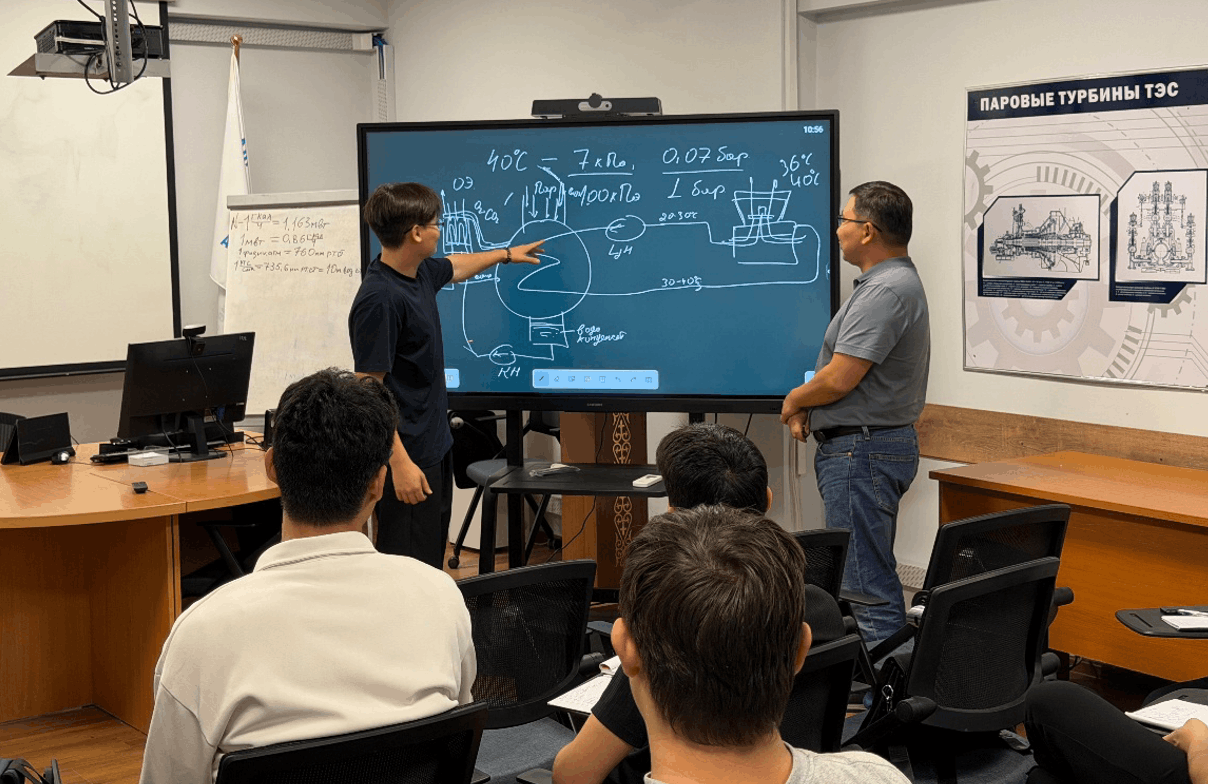
For future power engineers, this is an opportunity to see how a familiar engineering profession is evolving alongside technology. The classes cover how to work with digital data, find and analyze necessary information, use modern digital tools, and understand the capabilities of artificial intelligence when solving educational and professional tasks.
“Today, the energy sector is becoming increasingly technology-driven. For a young specialist, it is important not only to know the equipment and technological processes but also to work confidently with information and digital systems, and to understand the capabilities of artificial intelligence. At the same time, the main thing is to be able to analyze the data obtained and understand where and how it can be applied in practice”, notes Murat Olzhabayev.
Cooperation between AlES and Satbayev University has been developing for several years. The company hosts a branch of the Power Engineering department, giving students the opportunity to gain knowledge directly from specialists at an active energy enterprise.
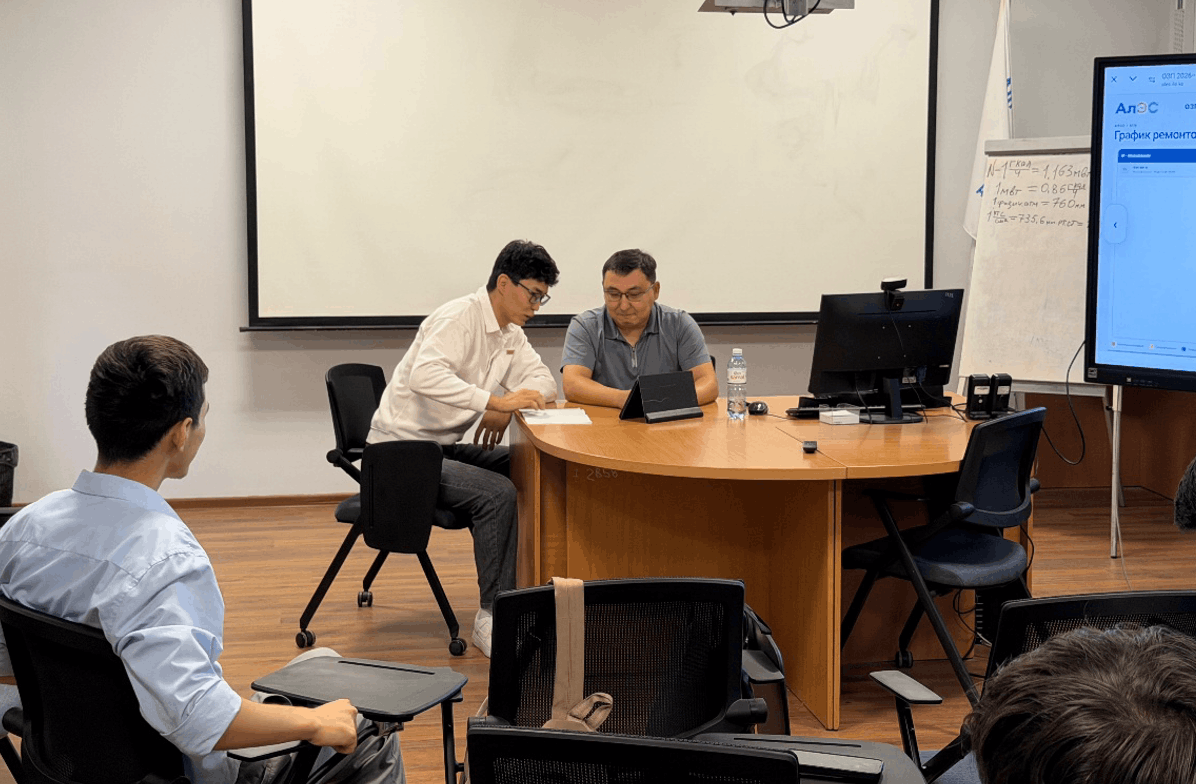
According to the students themselves, it is especially valuable when new technologies are examined not in isolation from their future profession, but through clear industry-specific examples.
“We constantly use digital services and artificial intelligence in our daily lives, but during classes, you begin to understand how these tools can be applied specifically in the profession. It is especially interesting to analyze examples from the energy sector and see where digital technologies actually help an engineer”, says Ramazan Kablanbekov, a third-year student.
Adilet Tursynbekov notes that such a format helps to take a fresh look at familiar academic disciplines:
“When you study turbines or heat engines only from a textbook, it’s one thing. Here, the instructor can immediately explain how everything works at the plant and what digital technologies are used today. This way, the material is much easier to grasp”.
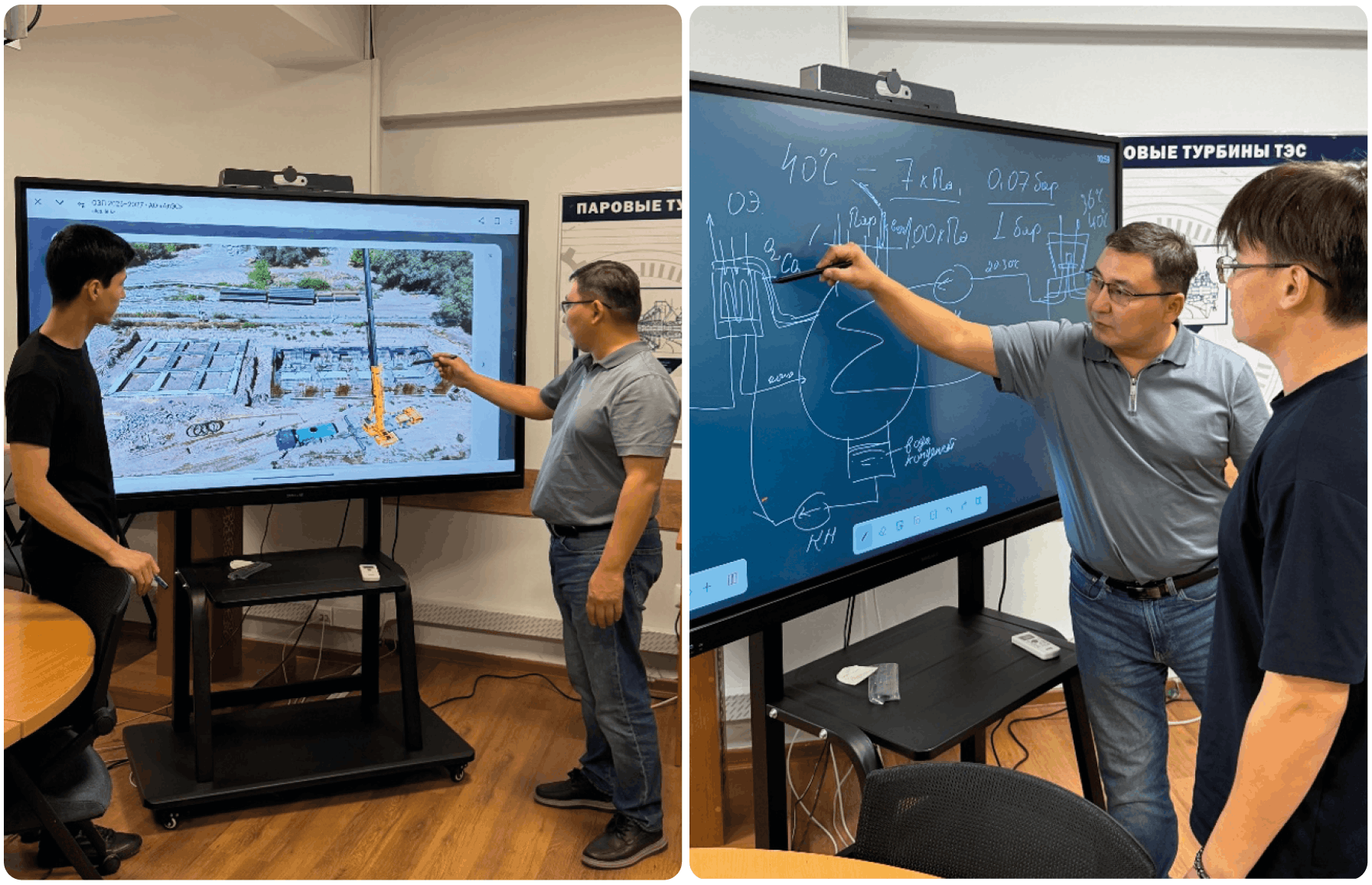
The unique feature of such classes is the combination of several disciplines. Students gain fundamental knowledge in thermal power engineering while simultaneously familiarizing themselves with tools that are becoming part of the modern production environment.
At the same time, artificial intelligence is viewed not as a substitute for professional knowledge, but as an additional tool. In order to use his capabilities correctly, a future engineer must understand the technological process itself, be able to verify information, compare data, and make decisions independently.
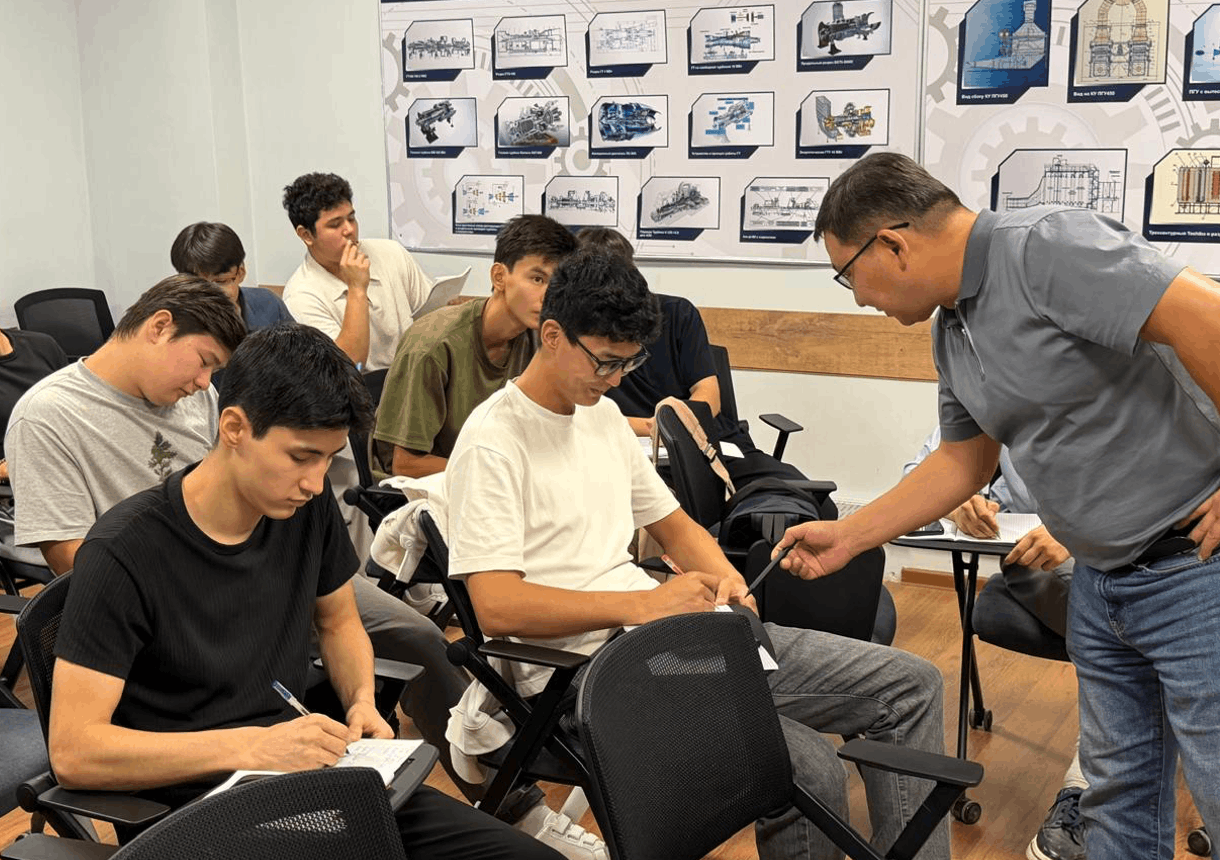
For AlES, the participation of production specialists in training students is an opportunity to pass on accumulated experience to the next generation of power engineers. And for the students, it is an opportunity to understand, even during their studies, what knowledge and skills will be in demand in an actual production environment.
Today, there are 21 future thermal power engineers in the classroom. Perhaps in a few years, some of them will come to work at the power plant as young specialists. And along with their knowledge of power equipment, they will bring with them another important skill – the ability to work confidently in a digital environment.
This is exactly how knowledge is carried forward: the experience of practicing power engineers is combined with new technologies, and a future career begins right in the university classroom.