


CHPP-2: A Station of Strategic Depth
The plan to build a new, larger CHPР-2 for the capital of Kazakhstan was conceived as early as January 1968. At that time, Resolution №65 of the Ministry of Energy and Electrification of the Kazakh SSR was adopted.
The design and cost estimate documentation was approved on October 31, 1969. A construction site for the combined heat and power plant was designated by allocating land 10 kilometers away from the city. It was crucial to move the plant outside the city limits to avoid worsening the air pollution in the capital. At that time, Almaty’s city boundary was defined by the Ryskulov-Tashkentskaya ring road, and the chosen construction site was situated among ravines.

The design parameters for CHPP-2 were a capacity of 315 MW and a steam output of 1,260 tons of steam per hour. Construction of the first phase began in 1974. To increase its seismic safety, the plant was recessed 12 meters into the ground. This was also because this vital city enterprise had to be built in a seismically hazardous zone and on “treacherous loams”. No other locations were suitable for this purpose.
Dinmukhamed Akhmedovich Kunayev, First Secretary of the Central Committee of the Communist Party of Kazakhstan, attached great importance to the construction. To monitor the progress of this important project, the city’s “Vecherka” newspaper opened a correspondent office in 1976. One of the first articles in the series was titled “This Lengthy ‘Initial Stage'”.
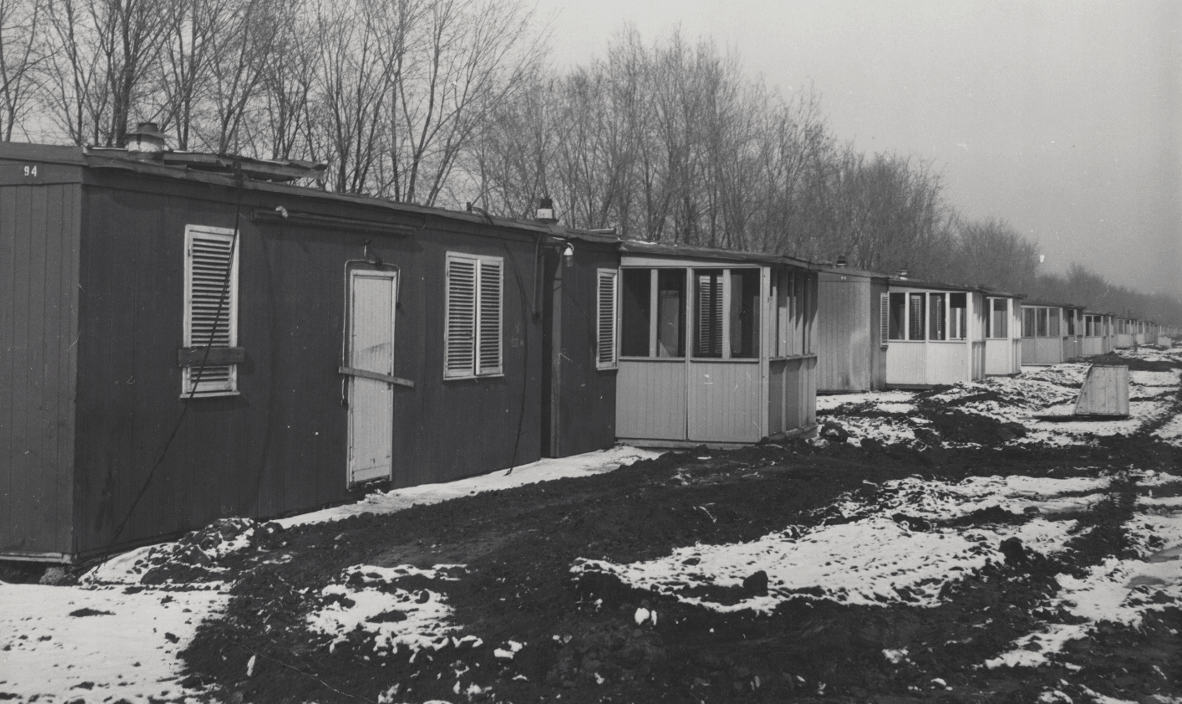
“While not differing significantly from others of its kind in terms of parameters, this plant has some very interesting and complex features. They are dictated by the rather unusual geological structure of the soil, coupled with the area’s nine-point seismicity. This is the first time a thermal power plant has been built under such conditions in the country. Moreover, experts claim that there are practically no analogues for construction in similar conditions in global practice.
It was precisely these circumstances that prompted the designers of the Central Asian branch of VNIPI energoprom to choose the so-called recessed option for this CHP. The essence of this approach is that to prepare the site for the main building’s foundation, a 15-meter layer of earth must first be removed. And in fact, the auxiliary building here is even being erected on bored piles. This method had not yet been practiced in Kazakhstan either,” wrote V.Nikonov, a correspondent for the “Vechernyaya Alma-Ata” newspaper, in his report on May 18, 1976.
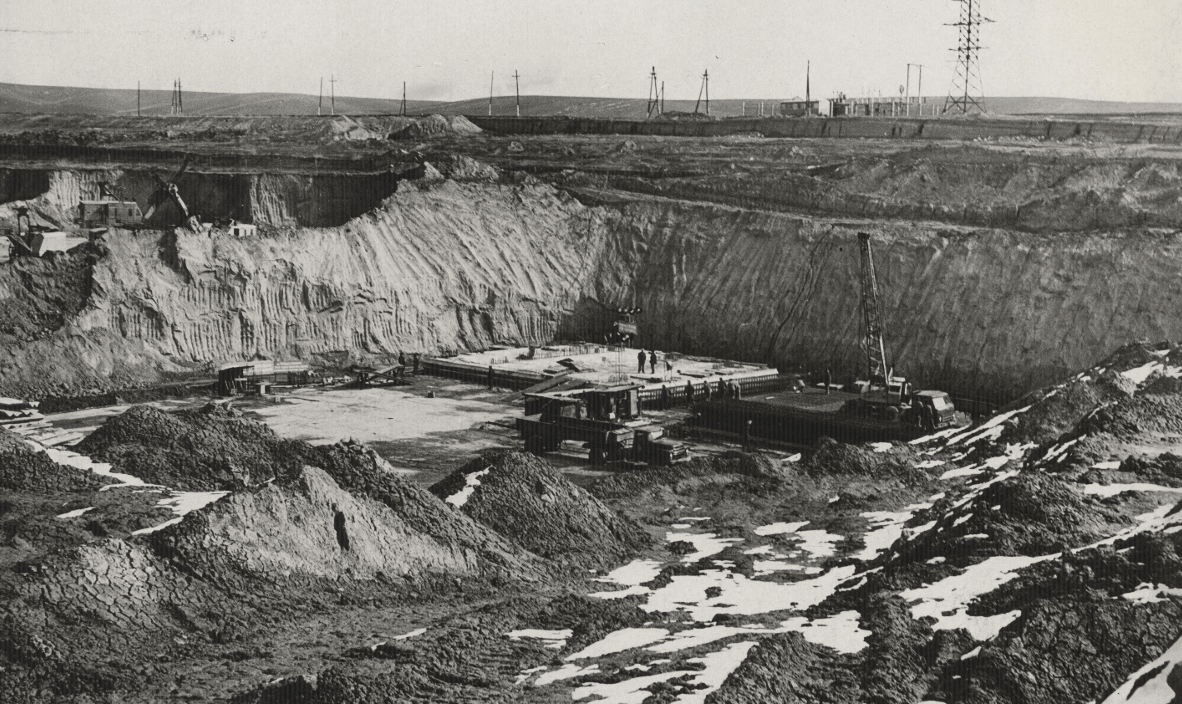
The work commenced with a rush: Stepan Zakharovich Paul’s comprehensive team laid 425 cubic meters of concrete on the first day of construction. As was customary, this labor feat was dedicated to the 25th Congress of the CPSU. But not everything went smoothly on the construction site. Despite the high-impact start, there was not even a telephone connection to the city, not to mention other technical, organizational, and social problems. Flaws were corrected on the fly. The newspaper did not hide the problems, but rather exposed them.
As the plant’s chief engineer, Ilya Davidovich Gotlib, told “Vecherka”, the builders failed to meet the plan in 1975, and therefore no groundwork was laid for normal work in 1976. “With such planning and organization of labor as is currently the case in the plant’s construction, the plan for its commissioning could simply be derailed.” And the specialist’s words proved prophetic.
The construction did indeed drag on. Systemic problems at the start were exacerbated by several factors. These included the uniqueness of the plant, as many standard construction and operational norms were not suitable for it from the outset. Unique ideas required unique solutions, and they were found. For example, seismically-rated boiler units with a steam capacity of 420 tons/hour were introduced here for the first time in the country.
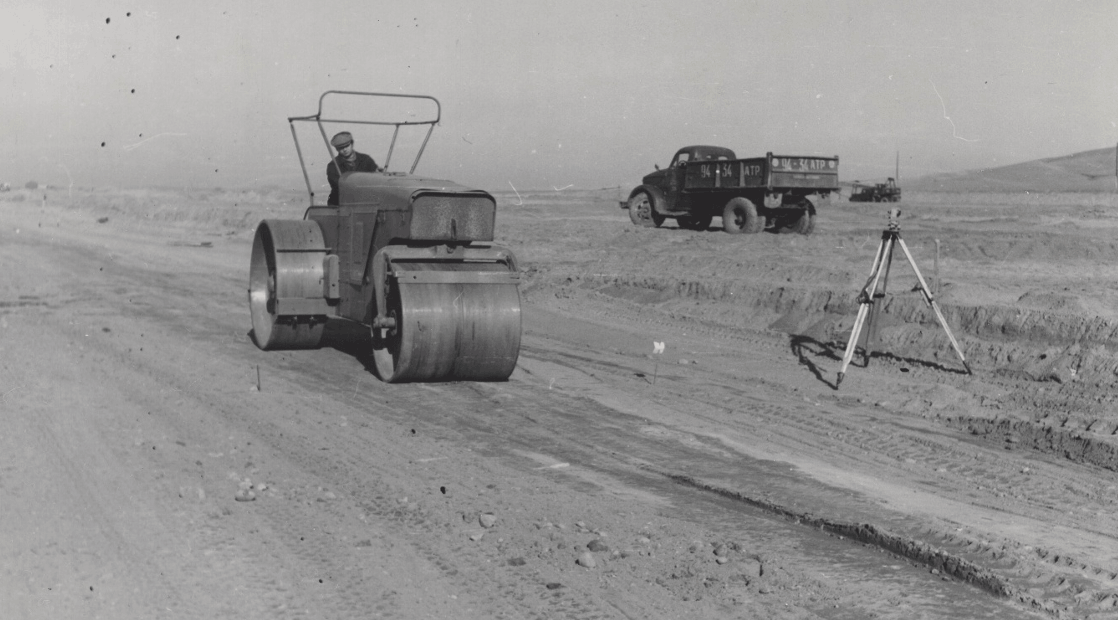
But despite the difficulties, the construction and installation work for the start-up complex was ultimately carried out between August 1974 and September 1980.
On September 30, 1980, the State Acceptance Commission, chaired by A.Zh.Zhakutov, the manager of “Almatyenergo”, drew up the acceptance certificate for the first start-up complex of CHPP-2. Overall, the first phase of CHPP-2 construction lasted from 1978 to 1983. In parallel, housing was built for the plant’s employees, and even a sanatorium was constructed. And the city, in the end, received its much-needed kilowatts.