


Aibol Aitkul: A Game Where Every Move Matters
 In togyzqumalaq, you can’t rely on chance. Logic, calculation, patience, and the ability to foresee the consequences of every decision are essential. Sometimes, the fate of a game is truly determined by a single move.
For Aibol Aitkul, this intellectual game has long been a part of his life. He was introduced to togyzqumalaq during his school years and was already achieving good results among his peers. Over time, this passion grew into a serious commitment to the game, which he maintains to this day.
“From the very first years, I did well and showed good results in my age category. Over time, togyzqumalaq became not just a hobby for me, but a real sport,” Aibol shares.
What attracts him most to the game is the need to constantly think several steps ahead. It’s not enough to find a good move for yourself; you also need to anticipate your opponent’s possible response, see several ways the game could develop, and choose the most precise one.
This is precisely why a special excitement arises during tense matches where it’s impossible to predict the outcome until the very end.
Aibol’s method of preparing for competitions is also interesting. One of his main opponents is himself.
“I mostly play against myself. Every person is their own toughest opponent. You know your own strengths and weaknesses, your usual moves, so you have to calculate for both sides. At the same time, I study games and analyze mistakes. I think it’s this constant analysis that helps you grow”, he says.
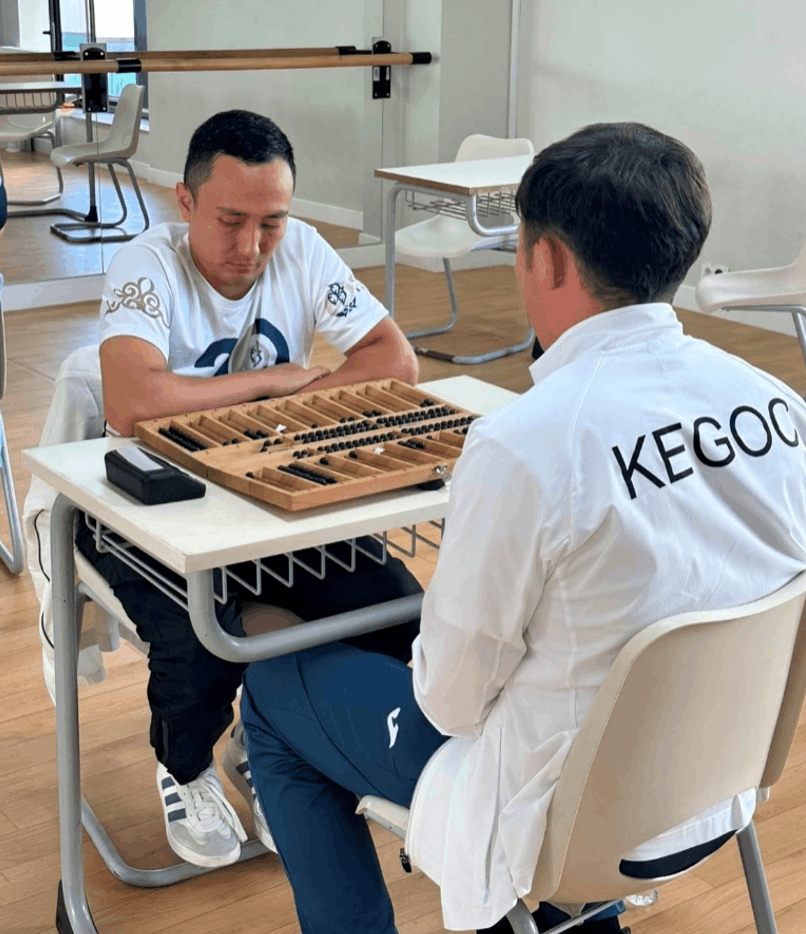 At the Samruk-Kazyna Spartakiad, Aibol took fourth place. He particularly remembers the decisive match, where he was literally one move away from a better result.
The match remained tense until the very end. Second place was so close that after the game ended, a feeling of disappointment naturally lingered. But it is precisely such moments, the athlete believes, that become especially valuable.
They make you analyze the game again, see your mistakes, and understand what you need to work on next.
“When you realize that a single move can decide the game, the most important thing is not to rush and to keep a cool head. You need to focus not on the outcome, but on the position, and calmly calculate the possible options,” Aibol notes.
The skills he develops through togyzqumalaq also help him in his professional life. His work also requires him to analyze technical issues, consider different scenarios, and assess the consequences of his decisions in advance.
According to Aibol, the principle is very similar: before you take the next step, you need to understand where it might lead.
For him, participating in the Spartakiad is not just a personal athletic challenge. Representing AlES, the athlete feels a special responsibility to his colleagues and the entire team.
“When you’re competing for your company, you want to achieve a worthy result and live up to your colleagues’ trust. Of course, I wanted to place higher, but fourth place in a competition of this level is a good result for me and, at the same time, motivation to keep moving forward,” he says.
Aibol also attaches great importance to internal athletic competition. In his opinion, the more strong players there are within the company, the higher the overall level becomes.
A strong opponent forces you to seek new solutions, train harder, analyze your games more carefully, and constantly work on self-improvement. And the experience of such a struggle helps you feel more confident in major competitions.
“The stronger the competition within the company, the stronger the athletes themselves become. This allows us to represent AlES more honorably in higher-level competitions,” Aibol is convinced.
This time, he fell just short of the podium. But perhaps it’s matches like these that become the most important.
They serve as a reminder that in togyzqumalaq, as in life, a single unsuccessful move doesn’t determine the entire journey. The main thing is to draw the right conclusions, continue thinking several steps ahead, and be ready for the next game.